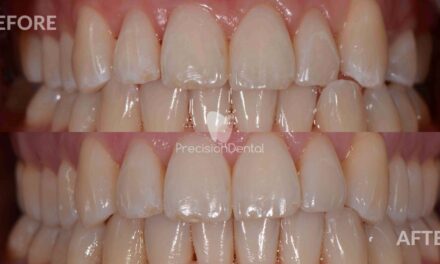
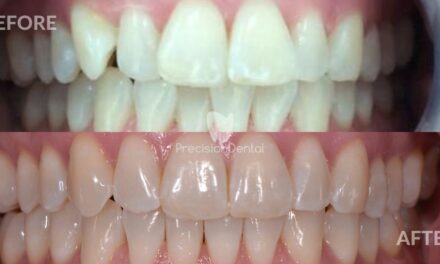
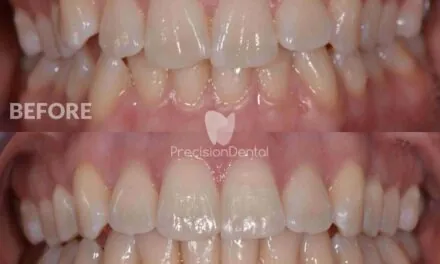
Clear Aligner Orthodontics Clinical Case in Murarrie
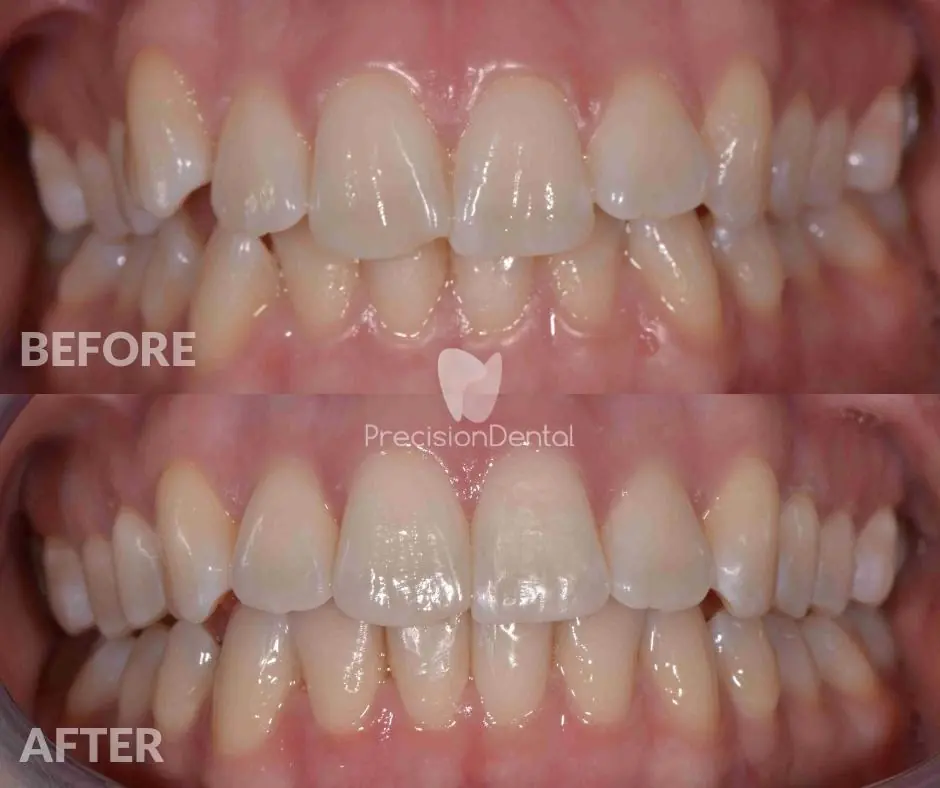
Can clear aligner therapy address mild to moderate crowding in Murarrie?
Case Note ID: Jan-2025-CA-MC
Location: Precision Dentistry (serving the Murarrie area)
Primary Treatments: Clear aligner orthodontic therapy, retention protocol
Supporting Technology: Digital treatment planning, intraoral scanning, sequential aligner fabrication
Presenting Clinical Problem
A patient presented with progressive anterior crowding requiring orthodontic intervention with the following clinical considerations:
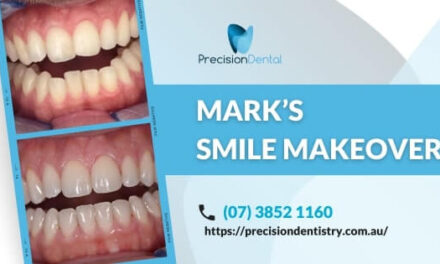
- Recent tooth movement and increasing anterior crowding
- Rotation of maxillary central incisors
- Progressive deterioration of anterior alignment over several years
- Patient awareness of changing dental appearance
- Desire for discreet orthodontic treatment
The primary clinical objective was to address anterior crowding and rotations through controlled tooth movement using removable aligner therapy.
Treatment Plan & Clinical Process
A comprehensive, phased treatment approach was developed:
Phase 1: Diagnostic Assessment
Digital intraoral scanning to capture existing tooth positions. Analysis of occlusal relationships, arch form, and space requirements. Assessment of root angulations and potential limitations. Virtual treatment simulation to predict movement patterns and treatment duration.
Phase 2: Active Aligner Therapy
Sequential clear aligners fabricated to achieve programmed tooth movements. Patient education on wear compliance requirements (20-22 hours daily), insertion and removal techniques, and cleaning protocols. Regular monitoring appointments (6-8 week intervals) to assess tracking and treatment progress. Refinement aligners utilised as needed to address discrepancies between planned and actual movements.
Phase 3: Retention Phase
Fixed or removable retention appliances provided to maintain corrected tooth positions. Patient education on permanent retention requirements and risks of relapse. Long-term monitoring schedule established.
Treatment incorporated principles of biological tooth movement, controlled force application, and comprehensive retention protocols to minimise relapse risk.
Clinical Outcome
Individual responses to orthodontic treatment vary significantly based on age, bone density, compliance with wear instructions, oral hygiene maintenance, and biological factors. Results experienced by one patient do not necessarily reflect outcomes others may experience. Complications can include incomplete correction, root resorption, enamel demineralisation, temporomandibular joint symptoms, gingival recession, and relapse of tooth positions. Permanent retention is typically required to maintain results. Treatment duration and complexity vary considerably between patients. Regular retainer wear and dental monitoring are essential for long-term stability.
Frequently Asked Questions for Murarrie Patients
What factors determine suitability for clear aligner treatment?
Clear aligner therapy is most appropriate for mild to moderate crowding, minor rotations, and limited spacing issues. Complex cases involving significant vertical or anteroposterior skeletal discrepancies, severe rotations, or extensive tooth movements may require alternative orthodontic approaches or longer treatment times. Patient compliance with 20-22 hours daily wear is critical for success. Age, periodontal health, oral hygiene capability, and motivation affect treatment planning decisions.
What are realistic timeframes and treatment expectations?
Treatment duration varies from 3-18 months depending on case complexity and patient compliance. Simple anterior alignment may take 3-6 months, while more complex cases require 12-18 months. Refinement phases may be needed if teeth do not track precisely as planned. Some discomfort with each new aligner is normal. Speech may be temporarily affected. Not all cases can be completed with aligners alone—some may require auxiliary attachments, interproximal reduction, or supplementary fixed appliances. Regular monitoring appointments are essential throughout treatment.
What are the long-term requirements and potential risks?
Orthodontic relapse can occur without proper retention, particularly in the first 1-2 years post-treatment. Permanent fixed retention and/or removable retainer wear (typically nightly indefinitely) is generally required. Costs include both active treatment and ongoing retention. Potential complications include root resorption (1-2mm is common), enamel demineralisation if hygiene is inadequate, gingival recession (particularly with lower incisors), temporomandibular joint symptoms, and incomplete correction requiring additional treatment. Individual outcomes vary significantly, and not all patients achieve ideal results.
Disclaimer: The material posted is for informational purposes only and is not intended to substitute for professional medical advice, diagnosis or treatment. Results vary with each patient. Any dental procedure carries risks and benefits. If you have any specific questions about any dental and/or medical matter, you should consult your dentist, physician or other professional healthcare providers.
Services We Mentioned:
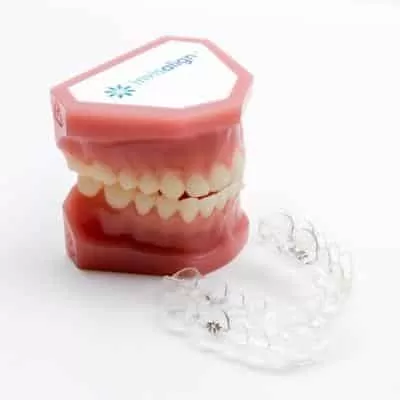
Invisalign
More Client Journeys