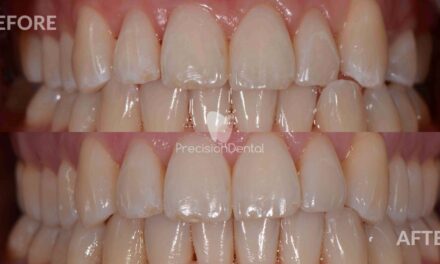
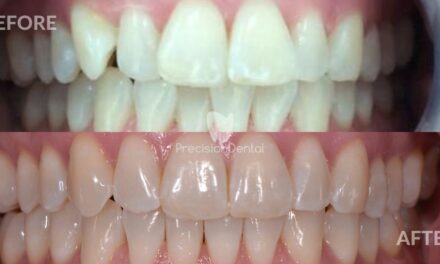
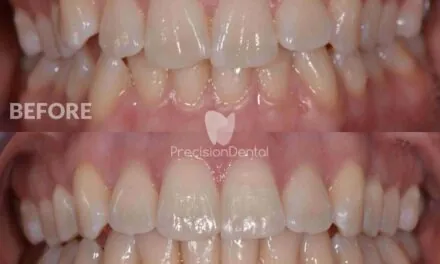
Clear Aligner Therapy Clinical Case in Brisbane

Can clear aligner therapy address irregular spacing and alignment in Brisbane?
Case Note ID: May-2025-CA-ISA
Location: Precision Dentistry (serving the Brisbane area)
Primary Treatments: Clear aligner orthodontic therapy, retention protocol
Supporting Technology: Digital treatment planning, intraoral scanning, sequential aligner fabrication
Presenting Clinical Problem
A patient presented with anterior aesthetic concerns requiring orthodontic intervention with the following clinical considerations:
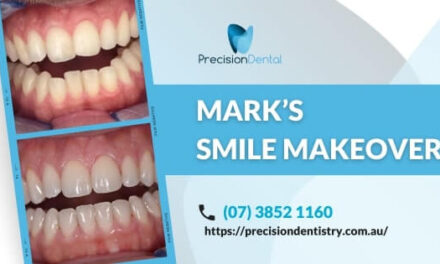
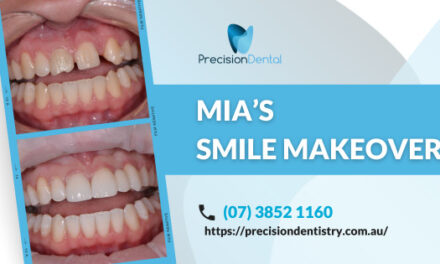
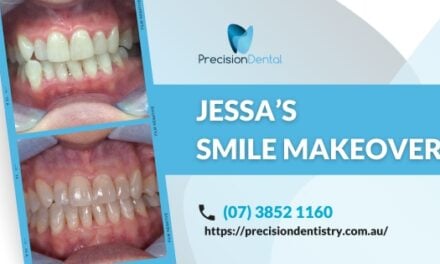
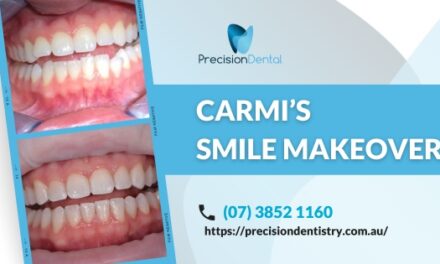
- Irregular tooth alignment affecting anterior aesthetics
- Uneven spacing between anterior teeth with multiple diastemas
- Patient dissatisfaction with smile appearance
- Desire for discreet orthodontic treatment approach
- Motivation to improve dental aesthetics
The primary clinical objective was to address spacing irregularities and alignment discrepancies through controlled tooth movement using removable aligner therapy.
Treatment Plan & Clinical Process
A comprehensive, phased treatment approach was developed:
Phase 1: Diagnostic Assessment
Digital intraoral scanning to capture existing tooth positions and spacing. Analysis of occlusal relationships, arch form coordination, and space distribution. Assessment of root positions and periodontal support. Evaluation of attachment sites and potential need for interproximal reduction. Virtual treatment simulation to predict movement patterns, treatment stages, and expected duration.
Phase 2: Active Aligner Therapy
Sequential clear aligners fabricated to achieve programmed tooth movements addressing both alignment and spacing concerns. Patient education on wear compliance requirements (20-22 hours daily), proper insertion and removal techniques, cleaning protocols, and dietary restrictions. Composite attachment placement on selected teeth to improve movement control where indicated. Regular monitoring appointments (6-8 week intervals) to assess treatment tracking and progression. Refinement aligners utilised as needed to address discrepancies between planned and actual tooth movements.
Phase 3: Retention Phase
Fixed or removable retention appliances provided to maintain corrected tooth positions and spacing. Patient education on permanent retention requirements and risks of spacing relapse. Long-term monitoring schedule established to assess stability.
Treatment incorporated principles of biological tooth movement, controlled force application through aligner design, and comprehensive retention protocols to minimise relapse potential.
Clinical Outcome
Individual results vary significantly. One person’s outcome doesn’t predict another’s. Issues can include incomplete correction, root shortening, white spots on teeth, receding gums, and spaces reopening. Spacing problems especially tend to come back without permanent retention. Treatment time varies between patients.
Frequently Asked Questions for Brisbane Patients
What makes aligner treatment successful?
Honestly, it’s mostly about wearing them 20-22 hours every day. If you’re not consistent, your teeth won’t move as planned. You also need to make sure they’re pushed on properly—not just sitting loosely. Good cleaning habits matter too. Beyond what you control, your age, bone density, and how your body responds to tooth movement all play a role.
What should I realistically expect?
Most cases take 6-18 months. Simpler spacing issues might wrap up in 6-9 months, but more complex situations need 12-18+ months. Each new aligner will feel tight and might be uncomfortable for a few days. You might have a slight lisp at first. Small composite bumps called attachments may be placed on your teeth—they’re tooth-coloured but noticeable up close. Not everyone gets perfect results.
Will I need to wear retainers forever?
Pretty much, yes. Spacing cases are notorious for relapsing, as gaps love to reopen. You’ll likely need either a bonded wire behind your teeth or a removable retainer worn nightly, indefinitely. Skipping retention is the most common reason people end up with their old problems coming back. Even with perfect retention, some minor shifting over the years is normal.
Disclaimer: The material posted is for informational purposes only and is not intended to substitute for professional medical advice, diagnosis or treatment. Results vary with each patient. Any dental procedure carries risks and benefits. If you have any specific questions about any dental and/or medical matter, you should consult your dentist, physician or other professional healthcare providers.
Services We Mentioned:
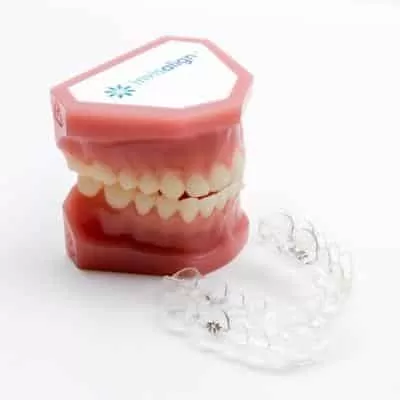
Invisalign
More Client Journeys