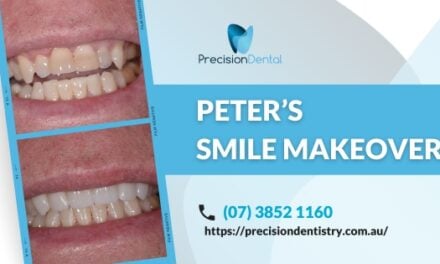
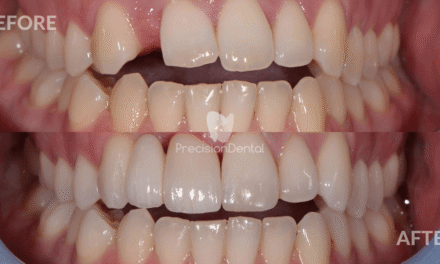
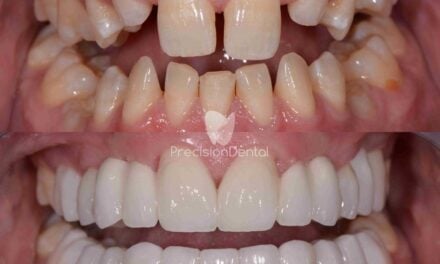
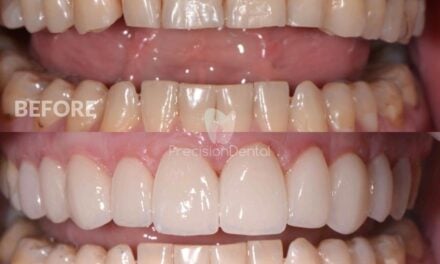
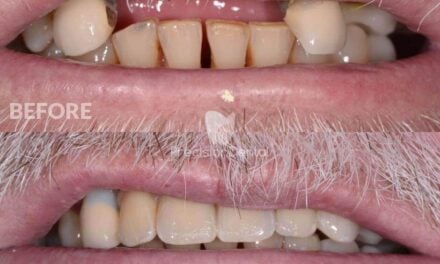
Dental Implant Rehabilitation Clinical Case in Redland Bay
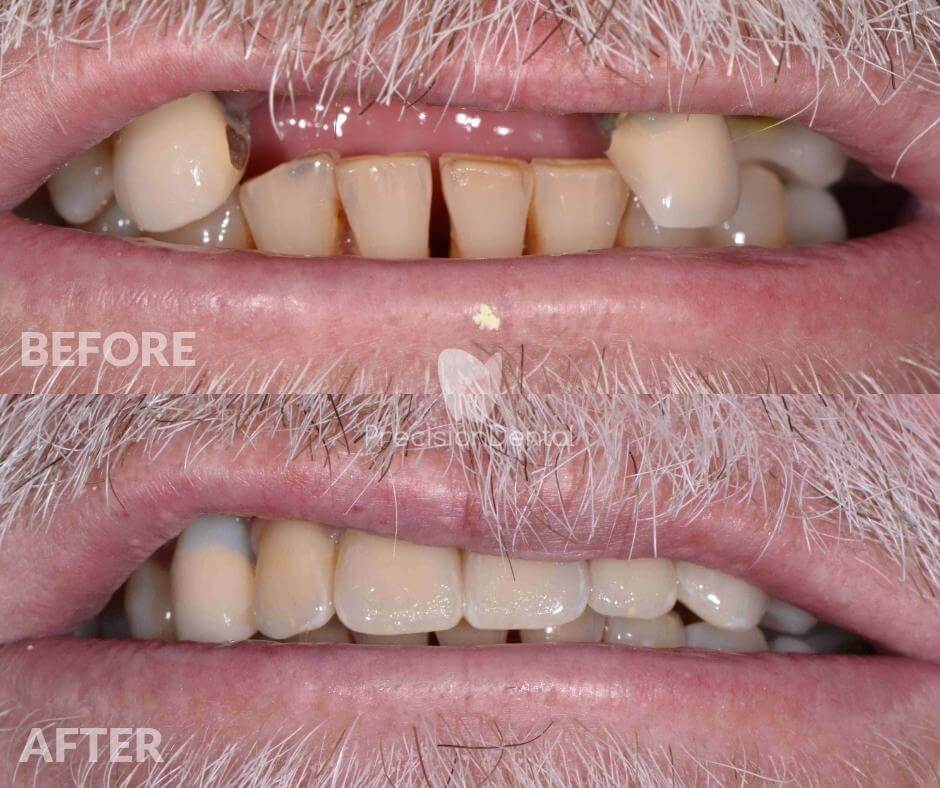
Can dental implants restore function after severe periodontal disease in Redland Bay?
Case Note ID: Nov-2024-DI-PD
Location: Precision Dentistry (serving the Redland Bay area)
Primary Treatments: Full arch implant rehabilitation, periodontal therapy, fixed implant-supported prosthetics
Supporting Technology: Digital treatment planning, CBCT imaging, immediate provisional protocols
Presenting Clinical Problem
A patient presented with advanced periodontal disease requiring comprehensive oral rehabilitation with the following clinical considerations:
- Multiple missing anterior teeth with previous unsuccessful partial denture attempts
- Active periodontitis with bone loss affecting remaining dentition
- Xerostomia (dry mouth) contributing to accelerated dental decay
- Previous bridge failure due to compromised abutment teeth
- Significant functional impairment affecting mastication and speech
- Patient had been referred to another facility but experienced treatment delays exceeding 12 months
The primary clinical objective was to address the periodontal infection, stabilise remaining dentition where possible, and restore oral function through implant-supported rehabilitation.
Treatment Plan & Clinical Process
A comprehensive, phased treatment approach was developed:
Phase 1: Periodontal Management
Initial focus on controlling active periodontal infection through scaling, root planing, and patient education on oral hygiene protocols. Assessment of remaining teeth for strategic retention versus extraction. Management of xerostomia through saliva substitute recommendations and medication review.
Phase 2: Diagnostic Planning
CBCT imaging to assess bone volume and quality for implant placement. Digital treatment planning to determine optimal implant positions based on prosthetic requirements. Assessment of systemic factors including medical history review and medication interactions.
Phase 3: Surgical and Prosthetic Rehabilitation
Implant placement using established protocols with consideration for bone quality and anatomical limitations. Provisional prosthetics provided during osseointegration period. Definitive implant-supported bridge fabrication following appropriate healing intervals.
Treatment incorporated principles of biological stability, functional restoration, and long-term maintainability, with regular monitoring appointments scheduled throughout.
Clinical Outcome
Individual responses to implant treatment vary significantly based on bone quality, healing capacity, systemic health factors, and oral hygiene maintenance. Results experienced by one patient do not necessarily reflect outcomes others may experience. Complications can include implant failure (reported at 5-10% over 10 years), infection, prosthetic complications, nerve damage, and need for future repairs or replacements. Ongoing professional maintenance and home care are essential for long-term success.
Frequently Asked Questions for Redland Bay Patients
What factors determine suitability for dental implant treatment?
Suitability assessment includes evaluation of bone volume and density, periodontal health status, medical history, smoking status, and medications that may affect healing. Patients with active periodontal disease require treatment before implant placement. Conditions such as uncontrolled diabetes, certain medications, or heavy smoking may affect treatment planning. Comprehensive clinical examination and CBCT imaging are typically required before determining candidacy.
What are realistic timeframes for implant rehabilitation?
Treatment duration varies considerably based on individual clinical factors. Typical timeframes include: periodontal therapy (2-6 months), healing after extractions (3-6 months), implant osseointegration (3-6 months), and prosthetic fabrication (2-3 months). Total treatment time commonly ranges from 8-18 months. Patients with compromised bone, active infection, or medical complications may require additional time and supplementary procedures.
What are the ongoing requirements and potential costs?
Implant-supported prosthetics require professional maintenance every 3-6 months, daily home care with specialised cleaning aids, potential prosthetic adjustments or repairs, and possible implant or prosthetic replacement over time. Costs vary significantly based on complexity, number of implants, prosthetic design, and individual healing factors. Not all patients achieve the same functional outcomes, and revision procedures may be needed. Medicare does not cover cosmetic or implant procedures.
Disclaimer: The material posted is for informational purposes only and is not intended to substitute for professional medical advice, diagnosis or treatment. Results vary with each patient. Any dental procedure carries risks and benefits. If you have any specific questions about any dental and/or medical matter, you should consult your dentist, physician or other professional healthcare providers.
Services We Mentioned:
Dental Implants
Smile Makeover
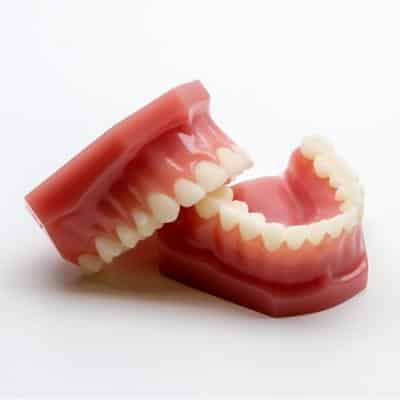
Dentures
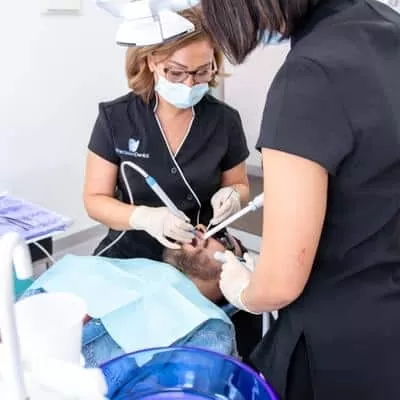
Dental Crowns & Bridges
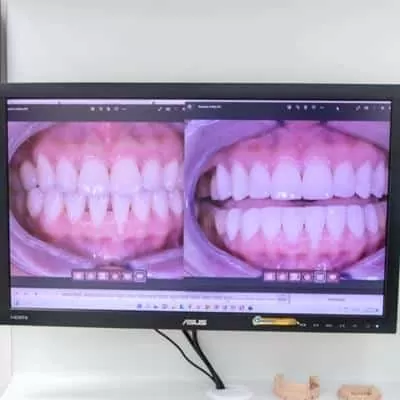
Gum and Periodontal Treatment
More Client Journeys